Personalization
Modern users expect apps to feel tailor-made. By analyzing preferences, browsing behavior, and history, apps deliver:
- Personalized content feeds
- Smart product recommendations
- User-specific dashboards

In the last decade, app development has transformed from simple coding projects into complex digital experiences. Today’s users don’t just want apps that work — they expect apps to understand them, adapt to them, and respond instantly. This shift in expectations is exactly where Artificial Intelligence (AI) has made its biggest impact on modern app development.
AI is no longer an experimental feature or an optional upgrade. It has become a core driver of smarter applications, faster development cycles, and deeply personalized user experiences. From intelligent recommendations to predictive behavior analysis, AI is redefining how apps are designed, built, and experienced.
So, what is AI’s biggest impact on modern app development?
The answer is simple yet powerful: AI enables apps to think, learn, and evolve with users.
Traditional apps follow fixed rules. A user clicks a button, and the app responds in a predefined way. AI-powered apps, on the other hand, learn from user behavior, data patterns, and interactions.
| Traditional Apps (Static) | AI-Powered Apps (Intelligent) |
|---|---|
| Fixed logic and rules | Adapts content dynamically |
| One-size-fits-all response | Predicts user needs |
| Performance degrades over time without manual updates | Improves performance over time |
| Manual configuration for personalization | Offers personalized experiences at scale |
This shift from static logic to intelligent decision-making is the biggest leap in app development history.
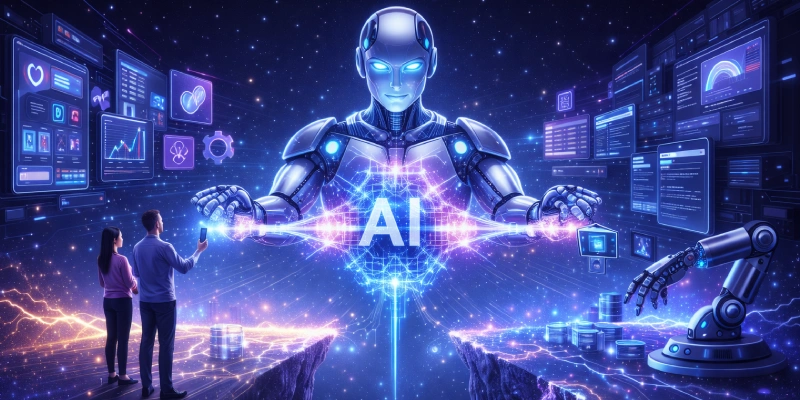
AI bridges the gap between user expectations and technological capabilities.
Modern users expect apps to feel tailor-made. By analyzing preferences, browsing behavior, and history, apps deliver:
AI transforms the process itself, helping teams focus on innovation instead of manual debugging.
With increasing cyber threats, AI algorithms play a vital role in reinforcing application security.
User experience has evolved beyond clean interfaces. AI adds an extra layer of intelligence by making apps responsive and context-aware.
Data is the backbone, and AI is the brain. Instead of relying on assumptions, AI-powered analytics identify trends, detect drop-off points, and suggest feature improvements. This leads to continuous refinement and higher ROI.
AI enables apps to automate workflows and trigger actions based on user behavior. This is especially valuable in enterprise apps, HR platforms, and fintech solutions where efficiency is critical.
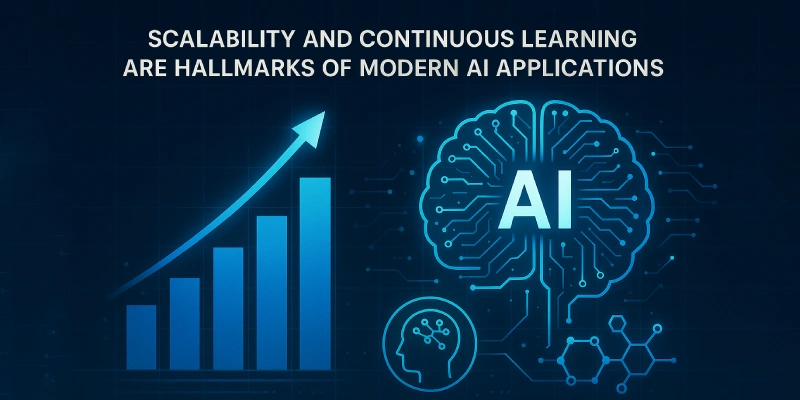
Scalability and continuous learning are hallmarks of modern AI applications.
In today’s competitive digital landscape, users compare apps not just within categories but across experiences. An app without AI feels outdated when compared to intelligent, adaptive alternatives.
Unlike traditional apps, AI-powered applications improve over time. As more data is collected, models become more accurate, allowing businesses to scale smoother and more cost-effectively.
AI integration is a:
AI turns apps into intelligent, user-centric, and continuously evolving digital experiences.
AI enhances app intelligence by enabling personalization, automation, predictive analytics, and smarter user experiences. It moves apps from static tools to dynamic partners.
AI analyzes user behavior and preferences to deliver personalized content, recommendations, and real-time interactions. This keeps users engaged longer and increases satisfaction.
Initially, AI integration may require investment, but it significantly reduces long-term costs through automation, efficiency, and scalability. It is important for future-proofing apps against evolving user expectations.
How to Reduce AI Inference Costs Without Killing Quality Home
Edge Computing & AI for Real-Time Business Intelligence Home Edge

Cybersecurity Mesh Architecture: Why Organizations Are Adopting It Home Cybersecurity